

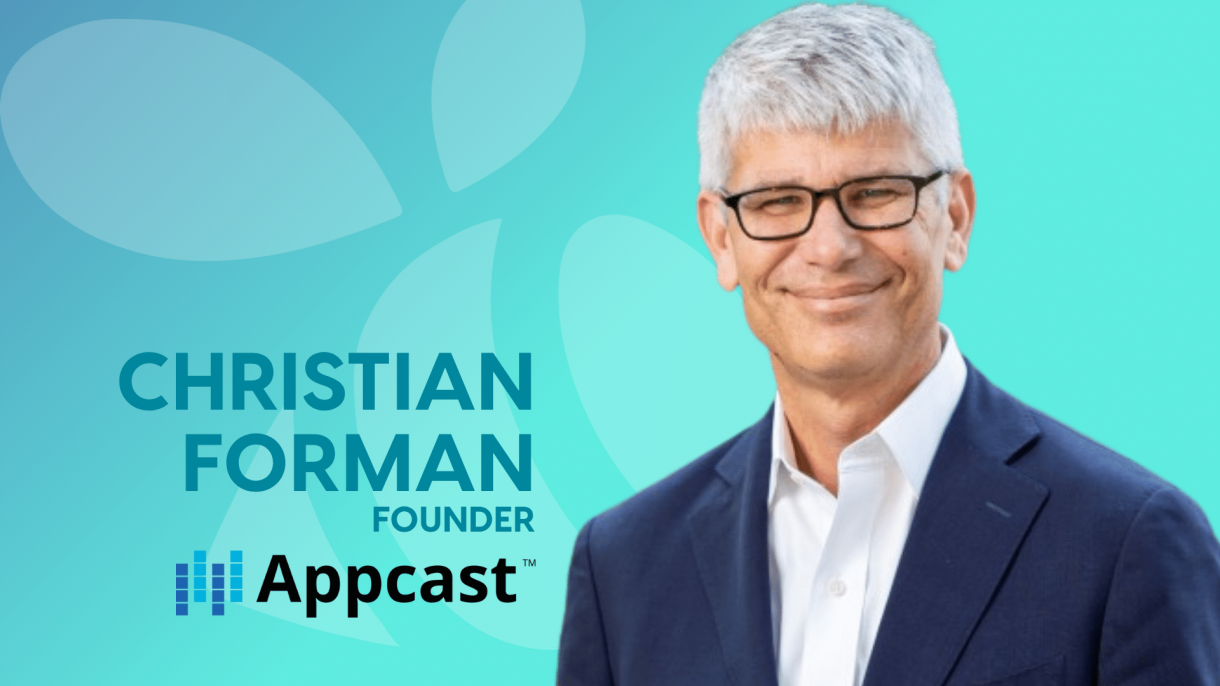
Chris Forman built a recruitment technology company from a town of 15,000 people, staffed it from places most investors have never heard of, and sold it to one of Europe’s largest media groups. He sat down with ZÜMI founder Mihaly Nagy to talk about customers, capital, and what actually matters in the first year.
Chris Forman does not fit the founder template. He lives in Lebanon, New Hampshire — population around 15,000, near the Canadian border, several hours from the nearest tech hub. He built his engineering team in Belarus and his largest sales office in Fredericton, New Brunswick, a Canadian city he cheerfully admits nobody can find on a map.
In 2014 he founded Appcast, a programmatic job advertising platform. Five years later, StepStone — the German job board owned by Axel Springer.. Forman stayed on to run the company for another five years before stepping down at the end of 2024. It was not his first exit, and not his last: he and his long-time technical co-founder built and sold two companies together.
Today he runs a seed fund, LDetachment, sits on boards, and – his own description – is a graduate at Johns Hopkins, studying war, and writing essays. He also answers the phone when a founder calls.
We spoke for half an hour. What follows has been edited for length.
Start with the pain, not the product
Mihaly Nagy: You look at a lot of early companies now. What do you actually bet on?
Chris Forman: Repeat founders, or industry veterans starting their first business. Those are the two. And we only invest in things we understand.
The reason the industry-veteran thing matters is that you know the pain intimately. You’ve watched it happen for years. You understand where money gets wasted, why something that should work doesn’t. That’s hard to fake and impossible to research your way into.
The ability to succeed in an early-stage business comes down to a few things. You have a good thesis. You solve a real problem. You have a problem people are willing to pay for. And you put together a community of people who are excited about building it and have the grit to see it through.
The last two sound like the hard part.
They are. But you can have a team full of grit that’s genuinely good, and if the idea is bad, it doesn’t work. You need signal in the noise. Both halves have to be there.
Build where the talent is
MN: You built your engineering team in Belarus and your sales floor in Canada. That’s not the standard playbook.
CF: I met Dmitri and we became friends. He’s brilliant – one of those people you build a business around. That’s how it started. It wasn’t a strategy at first.
But it became one. I have an organizing principle I’ve used in every business: talent is distributed equally, opportunity is not. So why does everyone crowd into the same four zip codes? If you’re hiring AI research scientists, fine, go to the Valley. But most of us aren’t building world changing technology. We’re building software that helps run businesses.
We put our largest office in Fredericton, New Brunswick. Three universities. SAP, Oracle, Salesforce and Microsoft all have offices there. People cost about 30% less than in the US, they’re bilingual, and — this is the part people miss — they stay. We grew that office to 150 people.
MN: And Lebanon, New Hampshire?
CF: Dartmouth is right there. That’s what I look for: excellent higher education. You pull in smart people whose partners are professors or doctors. We’ve built businesses in places most people would never invest, and it’s one of the smartest things we ever did.
You get rewarded as an entrepreneur with higher-quality talent, more loyal and happier, if you go where having a good job is still something people value. We had 50 developers in Belarus. When the war started, we evacuated every one of them and their families inside 48 hours. We paid for all of it. About half emigrated to Canada and Poland; some went back. hose people will run through a wall for you, because that doesn’t happen every day where they’re from.
The unglamorous truth about raising money
MN: You are an founder turned investor. What’s the ticket size conversation actually like?
CF: It depends on the investor. I’ve written half-million-dollar checks and I’ve written $25,000 checks.
My advice to a founder: don’t waste your time with $5,000 or $10,000. Twenty-five thousand should be the smallest check you take, and only from someone who brings something else — a channel, a good board member, an advisory role. You don’t want a hundred people on your cap table.
MN: And what has to be true for the round to happen at all?
CF: Understand that “seed” means something different than it used to. When I was building, seed meant pre-revenue, product-market-fit stage. Now seed is closer to what Series A used to be — you’re scaling somewhat, proving product-market fit.
At that point it’s all about what it costs to acquire a customer and how long they stay. That’s the dirty little secret of the software business. Everything is that ratio. Investors want their money to go into rapid scaling, not into building. If it costs you a dollar to get a customer, you get it back in seven months, and you haven’t hit diminishing returns — that’s what they want to see. If it costs two dollars, takes 18 months, and churn is already climbing, that’s a money drain.
Three things, if you’re just starting
We ended by asking Forman what he’d tell a founder with an early product, limited cash, and no clear map. He didn’t hesitate.
- Get a few marquee customers to pay you to help build it.
Find companies that live with the problem and go to them directly. Tell them you want them as a development partner. Give them an unlimited license for as long as they subscribe – five thousand a year, whatever the number is -and in exchange, they help you make it good.
There are two reasons. First, if you’re ever going to raise capital, you need referenceable accounts. Second, you’re going to get it wrong. Everyone does. When people start using the thing heavily, that’s when you find out how to make it right. - Don’t overthink development.
If a serious client tells you they want it to do something, and it makes sense to you, and it’s tractable – just do it. People overthink business. Solve the client’s problem.
But be careful about the distinction. Don’t listen to customers about what business you should build. You’ve decided that. Listen to them about how to make it a better shovel. Then go fast. - Raise money, but keep it tight.
There’s no ego in this. It troubles me when founders treat raising money as a victory. People want to go out and celebrate. No – we’re working tonight. I’ll bring beer and pizza. Raising money doesn’t mean anything on its own. It means you now have the ability to go do something real. So go do that.
In every business I built, I never raised more than $500,000 or $750,000 to get started. People would have thrown more cash at us. But more money makes you stupid. Get to product-market fit and get to revenue on that money. The great thing about software is that you can, if you’re sharp.
Chris Forman founded Appcast in 2014 and led it through its acquisition by StepStone. He invests in early-stage companies and sits on several boards .

